


Start Punch Lists Early: Contractor Punch List Process, Photo Proof

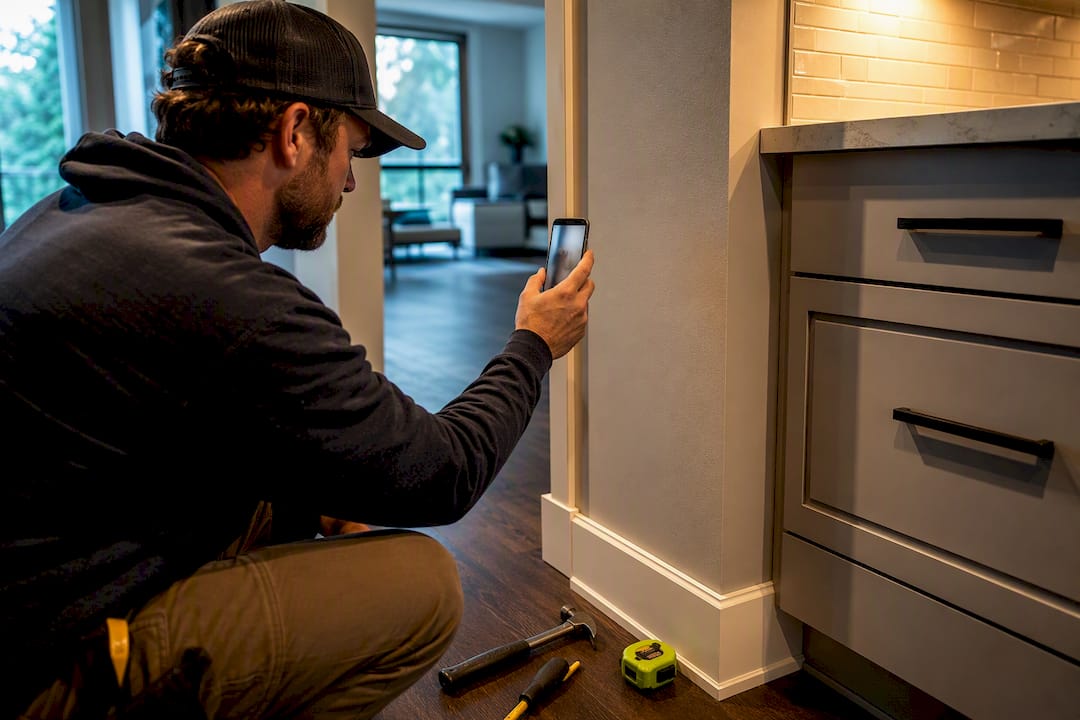
The building punch list process is the documented, step-by-step method of identifying, assigning, and verifying every incomplete or defective item before a project reaches final completion. The contractor prepares the initial list, the architect and owner review and verify it, and the resolved items directly determine when retainage gets released and final payment is issued. Formal industry practice ties this process to the Certificate of Substantial Completion, often referred to by its AIA form number, G704.
TL;DR:
Most punch list items are routine issues like cosmetic defects, mechanical problems, or missing documentation, which can be identified and fixed within 30 to 60 days.
A clear, detailed list with assigned responsibilities, firm deadlines, and photographic evidence reduces delays and disputes during project closeout.
Starting the punch list process early with self-inspections and weekly meetings helps prevent last-minute backlog and accelerates closeout.
Using digital tools that require photo verification and filter-by-trade views improves accuracy and accountability for punch list closure.
Most delays happen because teams wait until the project is nearly complete to begin inspections; early preparation streamlines final completion.
Table of Contents
What a Punch List Covers and How It Differs From a Progress Checklist
A progress checklist tracks work as it happens during construction. It measures percentage complete and confirms sequencing is on track. A punch list is different: it only appears near the end of a project, and it exists to catch what is wrong, missing, or unfinished after the bulk of the work is done.
Punch items generally fall into four categories:
Safety and code items: missing guardrails, mislabeled panels, blocked exits.
Functional items: a door that doesn’t latch, an HVAC zone that won’t hold temperature.
Cosmetic items: paint drips, scuffed trim, uneven caulk lines.
Documentation items: missing warranty cards, incomplete as-built drawings.
Unresolved items in any of these categories can hold up more than appearances. Owners routinely withhold retainage, often a moderate percentage of the contract value, until the list is cleared. That single fact is why a disciplined punch list creation process matters as much for cash flow as for quality control.
Who Prepares the Punch List and When Does the Process Start?
The contractor writes the first draft. This is standard practice under AIA-style contract documents, and it is the contractor, not the architect, who owns the initial list. Industry guidance from Procore confirms this division of labor: the general contractor identifies and documents open items, while the architect and owner review, add to, and verify them.
The process typically kicks off with two triggers:
The contractor issues a notice of substantial completion, signaling the project is ready for review.
A pre-final inspection is scheduled, where the architect (and often the owner or owner’s representative) walks the site.
Owners sometimes join this walk directly, especially on smaller commercial or residential jobs where there’s no separate architect of record. On larger public works, the process may also involve a facility manager weighing in before the list is finalized. Anyone unclear on where the general contractor’s authority begins and ends should look at this stage specifically. It’s where most confusion about roles actually starts.
How Do You Run a Punch List From Start to Finish?
A clean closeout follows a repeatable sequence. Skipping steps, especially the early ones, is what turns a punch list into a two-month fight.
Pre-punch self-inspection. Run this internally 2 to 3 weeks before the formal walkthrough. Contractors who inspect their own work early reduce the volume of items owners flag later, which shortens the whole closeout.
Formal walkthrough. Move room by room, or zone by zone on larger sites. Photograph every deficiency and reference the spec section it violates, not just a general description.
Master list creation. Consolidate every item from every party into one document, then filter it by trade so each subcontractor sees only their scope.
Assignment. Name a specific subcontractor against each item, with a firm deadline. Vague ownership is the single biggest cause of stalled punch lists.
Correction. Subs complete the fix and submit resolution photos as proof.
Verification. The superintendent re-walks each item, confirms the photo matches the fix, and closes it in the master log.
Final sign-off. Owner and architect confirm the list is clear, releasing the path to retainage.
Most punch lists close in 5 to 10 business days once corrections start moving, though full closeout, including verification and paperwork, commonly runs 30 to 60 days on mid-size commercial jobs.
Pro Tip: Run a 15-minute weekly punch-list cadence meeting with your superintendent and subs during the last month of the job. It keeps items from piling up into one dreaded final walk, and it catches slow subs before they become the reason retainage sits for another two weeks.
What Are the Most Common Punch List Items?
Certain problems show up on nearly every closeout, and knowing what to expect during your own punch list procedures speeds up the walk considerably.
Finish and cosmetic:
Paint touch-ups around switches, corners, and trim
Misaligned baseboards or door casings
Gaps or cracking in caulk lines at tubs, counters, and windows
Mechanical, electrical, and plumbing:
HVAC zones out of balance or not reaching set temperature
Outlets or switches that test dead
Slow drips at supply lines or fixture connections
Site and cleaning:
Protective film still on appliances, glass, or flooring
Construction debris left in mechanical rooms or closets
Missing or incorrect signage, including code-required exit markers
Documentation:
Missing operations and maintenance manuals
Unfiled warranty cards
As-built drawings that don’t match final conditions
Photograph every item in this list on the spot. A verbal note gets disputed. A photo with a timestamp usually doesn’t.
How Do You Prioritize and Assign Punch-List Items?
Not every item deserves the same urgency, and treating a dead outlet the same as a scuffed wall wastes everyone’s time. Sort items into tiers:
Critical: life-safety and code violations, like a blocked fire exit or an ungrounded panel. These get fixed before anything else, often within 24 to 48 hours.
High: functional failures that affect occupancy, such as an HVAC system that won’t hold temperature.
Medium: cosmetic issues in visible, high-traffic areas.
Low: minor touch-ups in low-visibility spaces like utility closets.
Assign every item to a named subcontractor. If responsibility is genuinely unclear at the time of the walk, log it as “TBD, GC to coordinate” rather than leaving it blank. A blank field disappears; a flagged one gets chased down.
Set a real completion date for every entry, not a placeholder. When a sub blows past that date, the contract usually gives you remedies, including backcharges for bringing in another trade to finish the work. Escalation only works if the deadlines were specific enough to miss in the first place.
What Documentation and Tools Prevent Punch-List Disputes?
Every punch item needs the same minimum data fields to hold up under scrutiny: location (building, floor, room), an exact description, the responsible party, a photo, the relevant spec reference, the date logged, and current status.
Digital tools have made this far easier to enforce than a shared spreadsheet ever was. Look for:
Photo-required closure, so an item can’t be marked complete without visual proof
Filter-by-subcontractor views, so each trade sees only their scope
Exportable reports, so the owner and architect get a clean record at sign-off
Best practices from punch-list management platforms point to the same conclusion: requiring a resolution photo as the default acceptance evidence eliminates most disputes before they start. Platforms built around construction task management apply this same logic across the broader project, not just closeout. If you’re still working from a printed list on a clipboard, this is the single easiest upgrade to make.
How Does Verification and Retainage Release Actually Work?
Verification isn’t a rubber stamp. It requires visual confirmation against the resolution photo, followed by a superintendent re-walk before any item is marked closed. Sign-off on paper without a matching photo is how disputes come back months later.
The Certificate of Substantial Completion, or AIA form G704, formally marks the point where the punch list transitions from “open work” to “closeout tracking.” It sets the clock on warranty periods and, on many contracts, on retainage release too.
Before releasing retainage and issuing final payment, most owners require:
A fully closed punch list with no open critical or high-priority items
Verified resolution photos attached to every closed entry
Complete closeout documentation, including O&M manuals and warranty paperwork
A final walk with the owner or owner’s representative confirming the space is ready for occupancy
Homeowners managing their own closeout on a renovation should expect a scaled-down version of this same standard. Anyone unfamiliar with what that final stretch looks like can review a general renovation closeout guide before their own final walk.
What Mistakes Slow Down the Punch List Process?
Most closeout delays trace back to a handful of repeat mistakes:
Waiting until the end to start looking. Teams that skip pre-punch self-inspections end up facing a massive list at the worst possible time, right when everyone wants to be done.
Vague item descriptions. “Fix bathroom” tells a sub nothing. “Recaulk tub surround, unit 4B, north wall” does.
No photo requirement. Without one, “fixed” becomes a matter of opinion.
Unnamed responsibility. An item with no assigned party never gets done on schedule.
Pro Tip: When a deadline slips, don’t just re-flag the item and move on. Escalate it the same day, in writing, referencing the original due date. A paper trail is what makes contract remedies enforceable if the delay drags on.
A Contractor’s View on Why Most Punch Lists Run Late
Experienced contractors report a consistent pattern: jobs that start pre-punch walks early almost never end up with a bloated final list. The firm’s approach leans on trade-filtered punch documents, weekly cadence check-ins during the last stretch of a project, and photo verification as the standard for closing any item, not the exception.
The honest takeaway from the field: punch lists don’t get long because buildings are complicated. They get long because nobody looked early enough.
— DJ
Let DJ Custom Contracting Manage Your Punch Walk
Hiring a general contractor can be an alternative to chasing down subs on a spreadsheet during your final weeks of a project. Instead of one owner or property manager trying to coordinate a dozen trades on a compressed deadline, a contractor runs the entire punch-walk process as a single point of coordination, from the initial trade-filtered list through photo-verified closure and final documentation.

That single point of contact tends to matter most at the exact moment things get stressful: the last month before occupancy. Fewer owner change orders come up when items are documented clearly the first time, and retainage tends to release faster when the closeout paperwork is already organized before the final walk. If your commercial project is heading into its final stretch, request a punch-walk consultation through the commercial renovation contractor page and get a coordinated closeout plan before the deadline pressure sets in.
Sources
Recommended


Comments