


How to Legalize Work Without a Permit in NYC

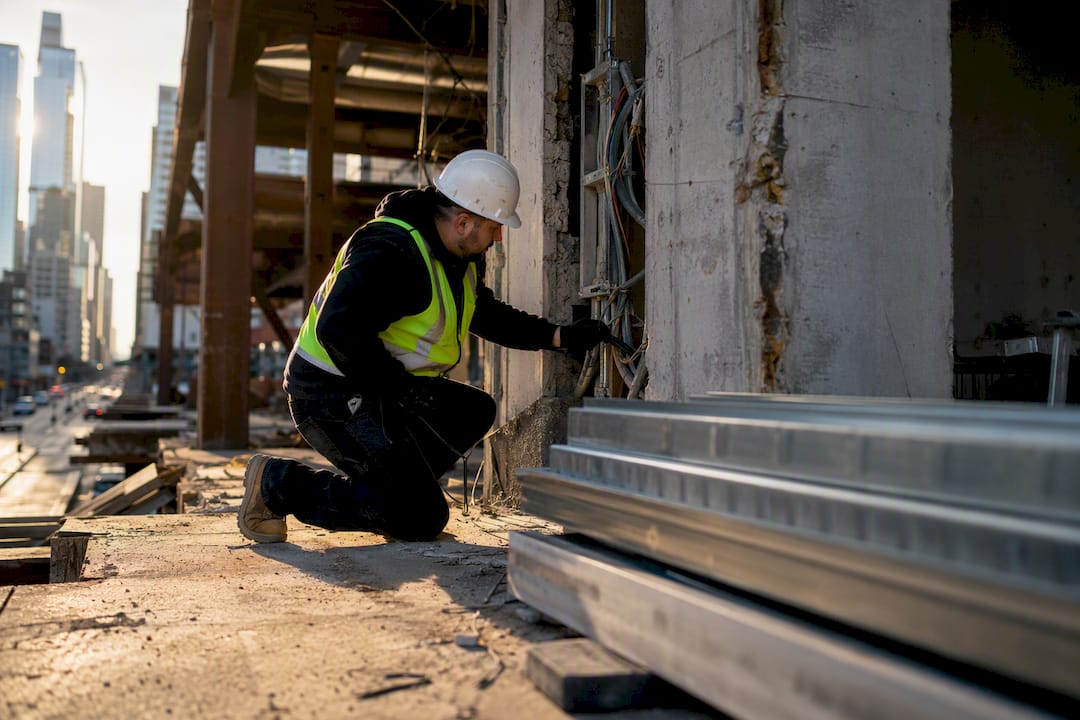
If you have construction done without a Department of Buildings permit in New York City, your immediate next step is to document the condition and pursue either an after-the-fact permit or removal of the work followed by a certificate of correction. Both paths carry civil penalties and, if a stop-work order is active, added urgency. A licensed contractor, a Professional Engineer or Registered Architect, or a firm like DJ Custom Contracting can assess which route fits your property and start the paperwork.
TL;DR:
Owners should verify existing violations or stop-work orders online before deciding whether to pursue an after-the-fact permit or removal.
The success of legalizing work depends on whether the finished construction complies with current building codes, which varies by project type.
Document preparations must include sworn affidavits, detailed photos taken within two days, and sealed as-built drawings when necessary.
Coordination with licensed professionals, especially for multi-trade corrections, speeds up the process and improves chances of timely approval.
Civil penalties are assessed based on violation type and property classification, with potential reductions possible if conditions meet specific criteria.
Table of Contents
Quick checklist: where to start with legalizing work without a permit
Before you call anyone, figure out exactly what you’re dealing with. Pull your property’s record on DOB BIS (the DOB’s Buildings Information System) to see whether a stop-work order or an open violation, such as a B101 code for work without a permit, already exists on file.
From there, move through these steps in order:
Confirm the violation status. Check DOB BIS or the Property Profile Overview for open violations, stop-work orders, and prior permit history.
Gather documentation. Collect dated photos, contracts, invoices, the deed or title, and any prior permits tied to the address.
Book an inspection fast. If you plan to request a penalty reduction, a PE or RA (or an experienced contractor who can loop one in) should inspect within two business days, since the L2 waiver form requires photos taken in that same window.
Choose your path. Decide between an after-the-fact permit or removal and restoration, factoring in likely civil penalties either way.
File the paperwork. Submit DOB applications, affidavits, and as-built drawings, then schedule corrective work through licensed trades.
This sequence matters because DOB reviewers expect to see the inspection and documentation before they’ll process anything else.
After-the-fact permit vs. removal: which path fits your property?
Not every unpermitted job can be legalized. DOB will approve an after-the-fact permit only when the completed work meets current code, which means a load-bearing wall reframed without a permit might pass, while an illegal basement bedroom with inadequate egress usually won’t.
Legalize (after-the-fact permit). File plans and applications as if the work were proposed today, pay the applicable civil penalty, and get sign-off once inspectors confirm code compliance. This route usually costs less overall than tearing work out, but it only works when the finished product is legal.
Remove and restore. Demolish or undo the unpermitted work, file a certificate of correction, and in many cases face a lower penalty than a contested legalization attempt. This is the mandatory route when DOB determines the work cannot meet code, such as work that blocks required fire separation.
Weigh building classification. 1 RCNY §102-04 sets different penalty math for one and two-family dwellings versus other building types, so the same violation can cost noticeably more in a multi-family or commercial property.
A pending sale or a lender’s requirements can force your hand. Buyers and mortgage underwriters routinely refuse to close with an open DOB violation on record.
What documents and forms does the DOB actually want?
DOB reviewers work from a checklist, and missing one item stalls the entire filing. Assemble these before you submit anything:
L2 waiver packet. If you’re requesting a penalty reduction or waiver, the L2 form lists specific waiver reasons, including no revenue value, first emergency permit, legalization, reduction in the total amount, and removal of illegal work, and it requires a notarized owner signature.
Affidavit of reduction. A PE or RA must inspect the site and submit a sworn affidavit backed by at least four supporting photographs taken within two business days.
As-built drawings. Sealed by an RA or PE when the scope requires it, along with contractor invoices and receipts showing what was actually built.
Certificate of correction. Filed once corrective work or removal is complete, referencing the exact job and violation numbers tied to the DOB record.
Emergency Work Notification. If the work was genuinely emergency repair, filing this notice within two business days of the work can support a reduced penalty.
Photo quality and timing trip up more owners here than any other part of the process.
Who should you hire to resolve a DOB violation?
Three types of professionals typically get involved, and each plays a distinct role.
Licensed contractor. Pulls permits for corrective work, coordinates trades like electrical and plumbing, and physically completes the correction.
Expediter. Navigates DOB filing systems, tracks plan intake, and often speeds up communication with the department, though an expediter alone can’t seal drawings or perform inspections.
PE or RA. Inspects the condition, prepares the affidavit of reduction, and seals as-built drawings when DOB requires professional certification.
Before hiring anyone, verify licensing through the Department of Consumer and Worker Protection’s Home Improvement Contractor database, ask for DOB-specific references, and confirm active insurance.
Pro Tip: When one violation touches multiple trades, framing, electrical, and plumbing corrections all at once, a single coordinated contractor who manages the inspection, drawings, and filing sequence together will usually reach DOB sign-off faster than hiring each piece separately. DJ Custom Contracting handles that kind of multi-trade remediation as one project rather than three separate headaches.
How does the DOB calculate civil penalties for unpermitted work?
1 RCNY §102-04 sets the penalty framework for work performed without a permit and for violating a stop-work order, and the rule treats one and two-family dwellings differently from larger buildings, with lower penalty ranges applied to the former.
Payment timing. DOB generally requires the civil penalty to be paid before it issues a new permit, accepts a certificate of correction, or rescinds a stop-work order.
Reduction circumstances. Owners who can show only part of the work was unpermitted, or that a subsequent bona fide purchaser bought the property without knowledge of the violation, often qualify for a reduced penalty.
Emergency exception. Work filed as an Emergency Work Notification within two business days of completion can also support a lower assessed penalty.
The rule doesn’t waive penalties automatically. You have to make the case with documentation.
How do you file an L2 waiver or penalty reduction request?
Getting a reduction approved comes down to matching your paperwork to one of the recognized waiver reasons and submitting it complete the first time.
Confirm eligibility. Check whether your situation fits a listed waiver reason: no revenue value, first emergency permit, legalization in progress, reduction in the amount due, or removal of illegal work.
Schedule the PE/RA inspection, then obtain the signed affidavit and take the required photographs within the two-business-day window the L2 form specifies.
Notarize the owner’s signature and assemble the full packet, referencing your exact Job and Violation numbers.
Submit to DOB and track the review.
Most rejections come down to late photos, a vague affidavit, or a missing notarization, not the underlying merits of the case.
How long does legalization take and what does it cost?
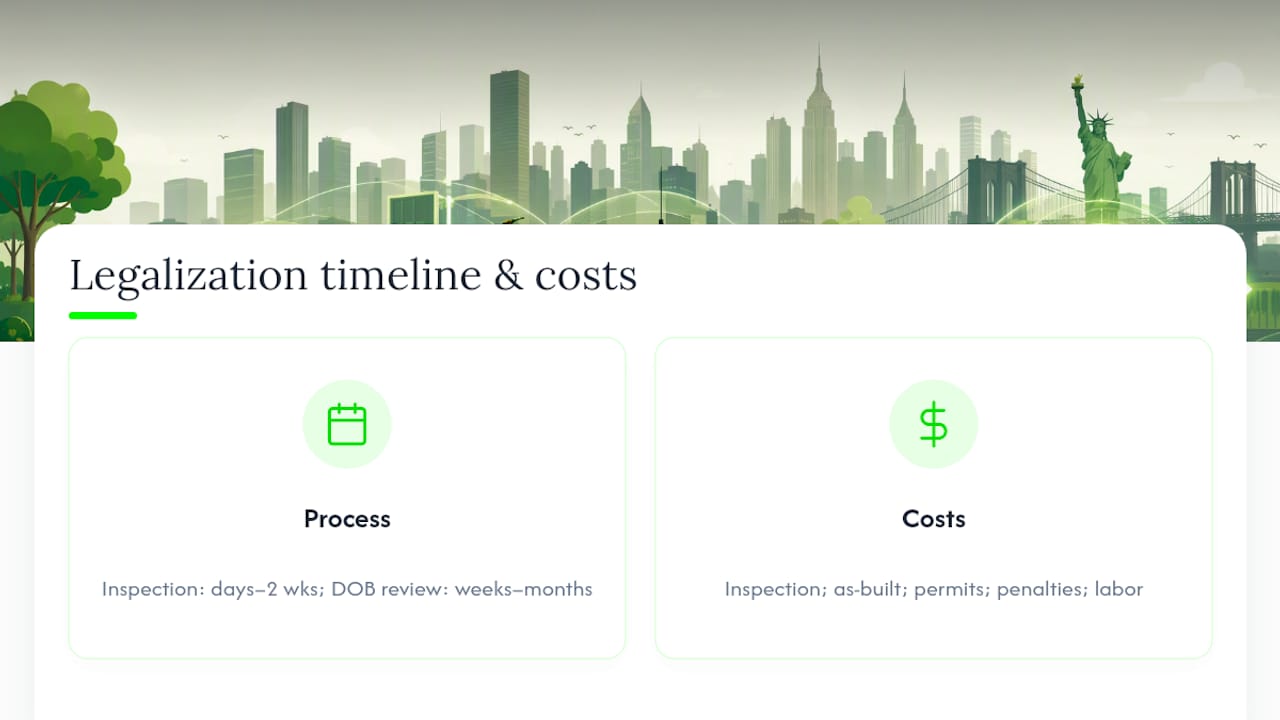
Inspection and documentation usually take a few days to two weeks. DOB review can run from several weeks to a few months depending on backlog. Corrections and reinspections add more weeks. Budget for inspection fees, sealed as-built drawings, permit fees plus any civil penalty, contractor labor, and possibly an expediter. Complex structural work or multiple stacked violations push both time and cost higher, as does a busy DOB filing season.
How do you avoid unpermitted work happening again?
Prevention is cheaper than any correction. A few habits protect you going forward:
Require proof of an active permit and HIC license before any contractor starts work.
Keep one project file with permits, receipts, and dated photos for every job.
Run a DOB BIS check before listing a property for sale and clear violations well ahead of closing.
Write contract clauses that make the contractor responsible for correcting any work performed without proper permits.
DJ Custom Contracting: what we see go wrong most often
Most owners we meet didn’t skip a permit on purpose. Someone hired an unlicensed handyman for “just electrical work,” or a prior owner did the job years ago. Coordinating the PE inspection, as-built drawings, and corrective trades in one sequence, instead of three separate hires, is what actually shortens the timeline to DOB sign-off. If you’re staring at an open violation right now, an inspection and a straight remediation plan are the fastest way to know your real options.
— DJ
How DJ Custom Contracting resolves DOB violations for good
DJ Custom Contracting has handled DOB and DOT violation removal, corrective construction, and coordinated PE/RA filings for New York property owners since 2018, and that means we already know which DOB reviewers expect what paperwork on which forms.

Instead of juggling a separate contractor, expediter, and engineer on your own, you get one licensed team managing inspection, as-built drawings, corrective trade work, and the filing itself, which is the coordinated approach that keeps a case moving instead of bouncing between offices. That matters most on multi-trade violations, where a fragmented approach can add months to a timeline that a single accountable contractor can close out faster.
If you’re carrying an open violation or a stop-work order, visit our commercial renovation contractor page to request an inspection and a remediation plan built around your specific violation numbers.
Where to find the official DOB rules and forms
L2 waiver form: the packet for requesting civil-penalty reductions or waivers, including affidavit and photo requirements.
1 RCNY §102-04: the rule governing penalty ranges, payment timing, and reduction eligibility.
Do I need a permit?: DOB’s list of minor work exempt from permits, plus licensing notes.
NYC Department of Buildings: the main portal for filings, stop-work order procedures, and contact options.
Sources
Recommended


Comments