


Home addition checklist: Your step-by-step guide for NYC

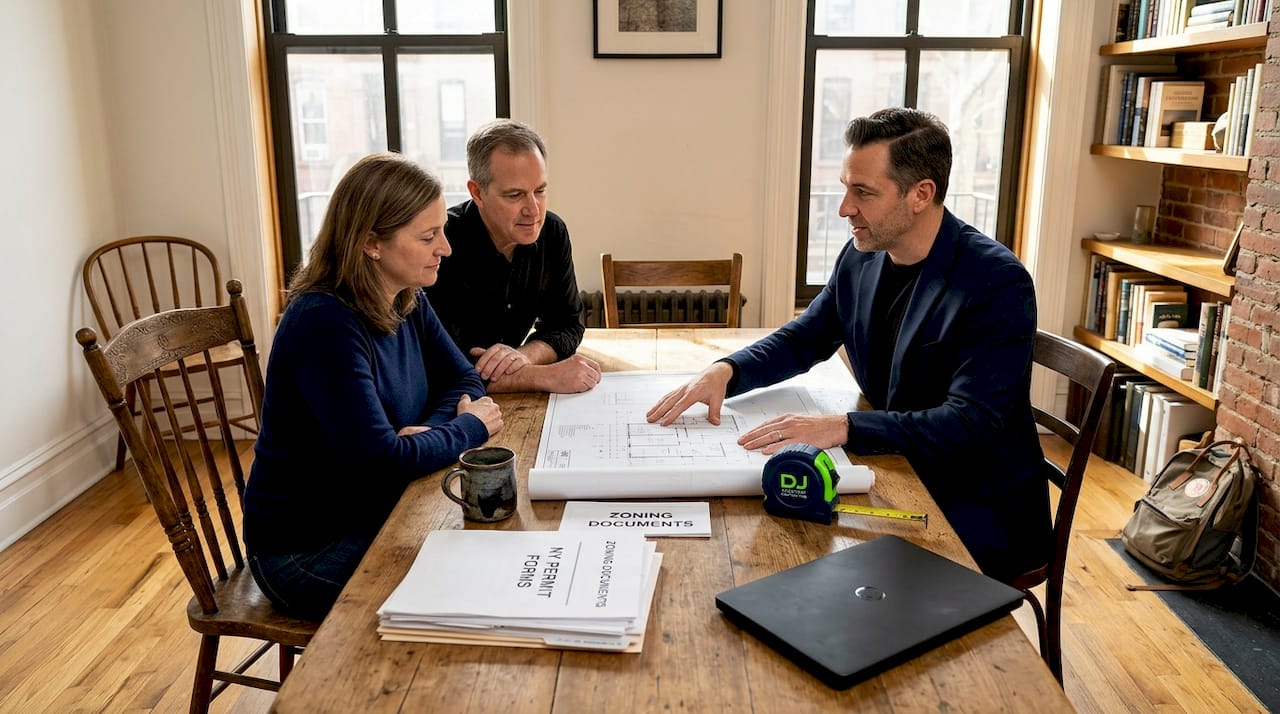
Adding onto your home in New York City is one of the most rewarding investments you can make, but the process is layered with regulations, documentation requirements, and approval timelines that can overwhelm even experienced homeowners. Miss one step and your project could stall for months. Get it right from the start, and you gain usable space, increased property value, and peace of mind. This checklist walks you through every critical stage of a home addition in NYC and the surrounding region, from initial planning through final certificate of occupancy, so you can move forward with clarity and confidence.
Table of Contents
Key Takeaways
Point | Details |
Plan for permits | Every NYC home addition requires a DOB permit and pro-stamped plans. |
Budget for delays | Buffer 10-20% extra time and costs due to review and approval bottlenecks. |
Inspections critical | Schedule and pass foundation, framing, and final inspections for compliance. |
Hire experts | Licensed architects, engineers, and contractors are essential for NYC projects. |
Edge cases matter | Special rules apply for second-story additions, floor area expansions, and septic systems. |
Planning phase: Setting goals, budget, and requirements
Every successful addition starts with a clear plan. Before you call an architect or pull any permits, you need to define exactly what you want to achieve and whether your property can support it. The home addition planning phases include planning, design, permits, contractors, construction, and inspection, and skipping or rushing any one of them creates problems downstream.
Start by defining your goals clearly. Are you adding a bedroom, a home office, a mother-in-law suite, or expanding your kitchen? Each use type carries different structural, mechanical, and zoning requirements. A bedroom addition needs egress windows and proper ceiling heights. A kitchen expansion requires ventilation and additional plumbing runs. Getting specific about the intended use early prevents costly redesigns later.
Build a realistic budget with room to breathe. NYC construction costs run significantly higher than national averages. A budget with a 10-20% contingency is not a luxury; it’s a practical safeguard against the unexpected conditions that almost always appear once construction begins, such as deteriorated framing, outdated wiring, or inadequate insulation.
Here are the foundational planning steps every homeowner should complete:
Define the primary purpose and square footage of the addition
Research property zoning and allowed uses for your lot in NYC or your county
Review any HOA rules, co-op board requirements, or deed restrictions
Assess your home’s current condition, including the roof, foundation, and mechanical systems
Establish a realistic project timeline with a built-in buffer for delays
Consult a lender if financing is needed, since construction loans have their own approval process
If you’re planning a second story or a large rear addition, understanding the residential addition workflow in NYC specifically will save you significant time. Zoning in the five boroughs varies by district, and what’s permitted in Queens may differ from what’s allowed in Staten Island or Brooklyn.
For homeowners working in older structures, understanding the particular demands of planning your home addition in the NYC/NJ region adds another layer. Pre-war buildings, for example, often have load-bearing walls in unexpected locations and masonry construction that requires specialized handling. You can learn more about working within those constraints by reviewing guidance on renovating pre-war NYC buildings.
Pro Tip: If you’re considering a second-story addition, have a structural engineer assess your foundation before you invest in design work. Many foundations in NYC’s older housing stock were not sized to support additional vertical loads, and discovering this after paying for full architectural drawings is an expensive lesson.
Design and documentation: Architect, engineer, and plans
With your goals and requirements outlined, the next step is working with professionals for a functional design. This phase is where your vision becomes a buildable set of drawings, and the quality of this documentation directly affects how smoothly your permit application moves through the Department of Buildings (DOB).
Hiring a licensed architect is not optional in NYC for most additions. The architect prepares the stamped architectural drawings, coordinates with a structural engineer for the structural plans, and ensures the design meets all applicable building codes. The required documents for an NYC room addition permit include stamped architectural drawings, structural plans, a site plan, energy code compliance documents, and HVAC load calculations.

HVAC calculations, specifically Manual J load calculations, determine the heating and cooling capacity your addition requires. Many homeowners overlook this step, but the DOB reviews it carefully. If your existing HVAC system cannot handle the added square footage, you’ll need to upgrade or extend it before construction begins.
The typical design and documentation timeline breaks down as follows:
Planning phase: 4 to 6 weeks for goal-setting, site assessment, and preliminary design
Design development: Up to 12 weeks for complex additions, including structural engineering and energy code documentation
Plan review and revisions: 2 to 4 additional weeks depending on the complexity of comments
These timelines mean that starting your project in January with hopes of a summer construction start is realistic, but only if design begins immediately. Delays compound quickly.
The key documents your architect and engineer must produce include:
Stamped architectural floor plans, elevations, and sections
Structural drawings with connection details and specifications
Site plan showing the addition’s footprint, setbacks, and lot coverage
Energy code compliance documentation (typically using REScheck for residential projects)
HVAC Manual J load calculations
Plumbing and electrical schematics where applicable
Your addition contractor services team can help coordinate between your architect, engineer, and the DOB to make sure nothing falls through the cracks during this phase.
Pro Tip: Before your architect submits plans, ask them to conduct a pre-submission review specifically looking for existing non-compliances in your home. Adding square footage can trigger requirements to bring the entire building into current code compliance, which dramatically increases scope and cost.
Permits and approvals: Submitting, fees, and waiting
Permit in hand, you’re ready to move into hiring contractors and managing construction, but first you have to get the permit. In NYC, room additions always require a building permit from the DOB. Major additions are classified as Alteration Type 1 (ALT1), which involves the most rigorous review process.
Here’s how the permit process works, step by step:
Compile all required documents as outlined in the design phase
Submit your application online via DOB NOW or BISweb, NYC’s online building application portals
Pay applicable permit fees, which typically range from $700 to $3,500 depending on project scope and valuation
Wait for DOB plan examiner review, which averages approximately six weeks for a standard submission
Respond to any plan objections or corrections the examiner identifies
Receive permit approval and post the permit visibly at the job site
Schedule required inspections at each phase of construction
“Timeline delays are common from DOB reviews. Plan a 20% buffer into your overall project schedule to account for back-and-forth corrections and resubmissions.”
The comparison below shows how major and minor additions differ in terms of requirements and timing:
Factor | Major addition (ALT1) | Minor addition (ALT2) |
Permit type | Alteration Type 1 | Alteration Type 2 |
DOB review time | 6 to 12 weeks | 2 to 4 weeks |
Structural engineer required | Yes | Often not required |
Energy code compliance docs | Required | Sometimes required |
Full building code review | Yes | Limited |
Typical fee range | $1,500 to $3,500 | $700 to $1,500 |
If you own a co-op or condo unit, the permit process adds another layer entirely. Board approval is often required before the DOB will even review your application. Understanding the differences in co-op vs. condo renovations can help you avoid submitting prematurely and facing rejection on both fronts.
Hiring contractors and managing construction
Once your permit is approved, selecting the right contractor becomes your most important decision. A licensed, experienced general contractor does more than swing a hammer. They coordinate subcontractors, schedule inspections, manage materials, and serve as your primary point of accountability throughout construction.
Follow these steps when selecting and working with your contractor:
Solicit bids from at least three licensed contractors and compare scope, not just price
Verify licenses through the NYC DOB contractor lookup tool
Confirm the contractor carries general liability insurance and workers’ compensation coverage
Check references from at least two recent projects similar in scope to yours
Review the contract carefully for payment schedule, change order procedures, and warranties
Establish a weekly check-in schedule to stay current on progress
The benefits of hiring a general contractor for an addition project are significant. A qualified GC manages the full scope of work, reducing the risk of miscommunication between trades and keeping your project on schedule. For borough-specific guidance, the Manhattan contractor selection tips outline what to prioritize when evaluating candidates in a dense urban environment.
The inspection schedule is non-negotiable. The DOB requires inspections at each of the following stages:
Phase | Inspection type | What’s reviewed |
Foundation/footing | Structural | Footings, foundation walls, drainage |
Framing | Structural | Load-bearing elements, connections, spans |
Plumbing | MEP | Rough plumbing, drainage, venting |
Electrical | MEP | Rough wiring, panel capacity, grounding |
HVAC | MEP | Ductwork, equipment sizing, ventilation |
Final | Code compliance | All systems, finishes, egress, life safety |
Required inspections for room additions cover the foundation/footing, framing, plumbing, electrical, HVAC, and final completion stages. Missing an inspection or failing to schedule one in sequence can result in stop-work orders and require expensive demolition to expose completed work for review.
If you encounter any open violations on your property during this process, it’s important to address them quickly. Guidance on removing code violations outlines how to resolve existing DOB violations, which can otherwise block your permit from being issued.
Pro Tip: Before your contractor closes up any walls or ceilings, walk the site and confirm that structural connections are visible and complete, and that HVAC equipment and ductwork have been properly sized and installed. Once walls are closed, fixing errors becomes significantly more expensive.
Edge cases and final steps: Second story, full compliance, and county-specific needs
With the checklist complete, let’s step back and examine some expert lessons learned from NYC projects. Not every addition follows a straightforward path, and several scenarios require additional planning steps beyond the standard process.
The following situations require special attention:
Second-story additions: These require a thorough foundation analysis before design begins. Adding vertical load to an existing structure without confirming the foundation’s capacity is a serious structural risk.
Large-scale additions: If your addition exceeds 110% of the existing floor area, the DOB may require the entire building to be brought into compliance with current building codes, which can include accessibility upgrades, fire suppression systems, and energy code improvements across the full structure.
Non-compliance risks: Your addition must not increase any existing non-compliances in the building. If the current structure already violates setback rules or height limits, your addition cannot make those conditions worse, even inadvertently.
Suffolk County and surrounding areas: Projects outside NYC proper, particularly in Suffolk County, often require septic system approval in addition to the standard building permit. If your addition adds bathrooms or increases wastewater load, a new septic review is mandatory.
Final certificate of occupancy: After the final inspection, the DOB issues a Certificate of Occupancy (CO) or an amended CO reflecting the new square footage. Without this document, the addition is technically not legal to occupy, and it can create complications when selling or refinancing.
For homeowners considering additions as part of a broader financial strategy, understanding the financial impact of renovating a NYC apartment in 2026 can help frame the return on your investment realistically.
Expert perspective: What most checklists miss about NYC additions
Most national home addition checklists are built for suburban markets where permits move quickly, zoning is straightforward, and a competent DIY-inclined homeowner can manage parts of the process independently. NYC is a fundamentally different environment, and using a generic checklist here is how projects fall apart.
The most commonly overlooked issue is the interaction between structural tie-ins and long-term building performance. When an addition is attached to an existing structure, the connection point is where failure is most likely to occur if it isn’t designed and inspected carefully. Settlement, water infiltration, and thermal bridging all concentrate at that joint. In NYC’s aging housing stock, getting this detail right is critical, and it requires professional oversight that no checklist alone can replace.
HVAC is the second major blind spot. Many homeowners assume their existing system can be extended to cover new square footage. In practice, HVAC upgrades are often needed for additions, and undersized systems result in uncomfortable spaces and accelerated equipment wear. The cost to upsize equipment before walls are closed is a fraction of what it costs after the fact.
“Planning for a 20% buffer is not optional; it’s essential for NYC homeowners.”
Working with a contractor-led team that includes the architect, engineer, and construction manager under coordinated oversight is what separates smooth projects from costly ones. NYC requires professional stamps and filings that simply don’t exist in most other markets. A team that handles the full process together, from permit filing through final inspection, minimizes the gaps where delays and errors occur.
If you’re still in the early stages of deciding whether an addition is right for you, reviewing guidance on building additions in NYC can help you weigh the realistic scope of what’s involved before committing to the process.
Ready to tackle your NYC home addition?
For homeowners ready to move from checklist to action, expert support makes all the difference. DJ Custom Contracting LLC has been delivering full-service residential and commercial contracting solutions since 2018, with deep experience in NYC additions, alterations, permits, inspections, and compliance. No job is too big or too small.

Whether you need help navigating the DOB permit process, coordinating your architect and engineering team, or managing construction from foundation to final inspection, DJ Custom Contracting handles every stage. Our addition and alteration contractor services cover the full scope of your project, and our interior renovation expertise means seamlessly integrating your new addition with your existing living space. Contact DJ Custom Contracting today to schedule a free consultation and planning review.
Frequently asked questions
How long does the NYC room addition permit process take?
Expect about six weeks for standard DOB approval, but complex permits can take 4 to 12 weeks with plan objections and resubmissions. Building in a 20% schedule buffer protects your overall timeline.
What documents are needed for my permit application?
You need stamped architectural and structural plans, a site plan, energy code compliance documentation, and HVAC Manual J load calculations as part of the complete submission package.
When are inspections required during construction?
Inspections are required at each phase, including foundation/footing, framing, plumbing, electrical, HVAC, and the final completion review before your certificate of occupancy is issued.
Do additions over 110% of floor area trigger new code requirements?
Yes, additions exceeding 110% of floor area may require the entire building to meet current code standards, including accessibility, fire suppression, and energy code upgrades across the full structure.
Is a contingency budget necessary for additions?
Experts recommend a 10-20% contingency budget to cover unexpected structural conditions, material cost changes, and the timeline delays that are common in NYC construction projects.
Recommended


Comments